
- Walk In Anytime · No Appointment
Orthopedic Emergency Room in Houston, Open 24/7
A bone that looks wrong, a joint that will not move, or a limb you cannot put weight on needs an exam and an X-ray today, not a few more days of waiting it out. Our emergency physicians check the bone, the skin, the circulation and the nerves in one visit, then splint, treat the pain and arrange orthopedic follow-up.
Open 24/7, Even Holidays
No Appointment Needed
0 Min Wait Time
Experienced ER Team
Is it an ER visit? Start here
Go to an emergency room for any suspected broken bone that looks deformed, hurts severely, feels numb, bleeds, or followed a hard fall, crash or collision. A fracture emergency does not always look dramatic, so when you cannot tell, an X-ray is the faster and safer way to find out.
Call 911 right away
- Bone is visible through the skin, or bleeding will not stop with firm pressure
- A possible neck, back or head injury, or the person cannot be moved without risking more harm
- Trouble breathing, fainting or confusion after a chest or body injury
- A hip, pelvis or thigh injury where the person cannot move the leg
Come to NorthStar now
- The limb or joint looks bent, twisted or out of place
- You cannot put weight on it or use your hand normally
- Numbness, tingling, or fingers and toes that look pale, blue or feel cold
- Fast swelling with deep bruising, or pain you cannot control
- A cut over or near the injury, because any wound near a break is treated as an open fracture until proven otherwise
- Sharp pain with every breath after a blow to the ribs
May be able to wait for a doctor visit
- Mild swelling in a finger or toe, with normal color and feeling
- You can move the area and use it with only mild pain
- Pain is easing with rest, ice and elevation
What we handle as a bone and joint emergency
If you searched for a bone and joint emergency room, you probably want to know what actually gets done there. At NorthStar, the emergency physician handles the time-sensitive work. We find the break, protect the limb, control the pain and decide who needs a surgeon and how soon.
- Closed and open fractures, from hairline cracks to displaced breaks
- Dislocated shoulders, elbows, fingers and kneecaps
- Unstable joint injuries and severe ligament tears
- Rib, sternum and chest wall injuries
- Crush and high-force injuries after falls, crashes and work accidents
- Cast, splint or boot problems, such as a fit that turns too tight
How bad is the break? Severity at a glance
Not every fracture is treated the same way. This is how emergency physicians sort them and what usually follows.
| Type | What it means | Usual ER path | Urgency |
|---|---|---|---|
| Hairline or stress crack | A thin crack with the bone still in line. It can feel like a deep bruise and may not show on the first film. | Splint or boot, limited weight bearing, repeat imaging at follow-up if needed | Same day |
| Nondisplaced break | The bone is broken but the pieces are still lined up. | Splint first, cast later once swelling settles, orthopedic follow-up | Same day |
| Displaced or angled break | The ends have shifted out of line, so the limb often looks bent. | Pain control, realignment if needed, splint, orthopedic referral | Come now |
| Open (compound) fracture | The skin is broken near the bone, whether or not the bone is visible. | Sterile dressing, antibiotics, tetanus update, splint, urgent surgical team | Emergency |
| Break involving a joint, nerve or blood flow | The fracture reaches a joint surface, or the hand or foot below it is numb, pale or cold. | Rapid reduction and specialist input, often transfer for surgery | Emergency |
Common fractures and how each one is treated
The bone that breaks decides what we look for, what we protect and how long recovery usually runs.
Ribs
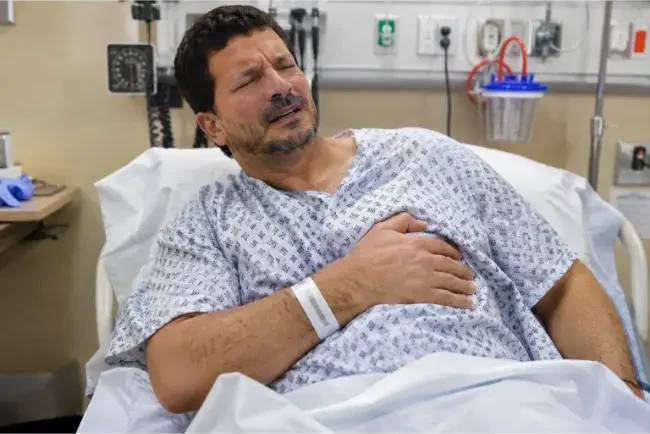
Broken rib treatment focuses on pain relief and deep breathing to prevent pneumonia. Chest X-rays check for lung injuries. We avoid chest wraps that restrict breathing. Most ribs heal within six weeks, but flail chest requires emergency care.
Come now

Sternum
Fractured sternum treatment begins with an ECG and chest X-ray to check for heart and lung injuries. Most isolated breastbone fractures heal with pain control and rest once serious injuries are ruled out.
Emergency

Collarbone and shoulder blade
Most broken collarbones heal with a sling and pain relief, while severe or displaced fractures may require surgery. Broken scapula treatment includes checking for chest, lung and nerve injuries. A CT scan often helps assess the fracture.
Come now

Arm, elbow and wrist
Fractured arm treatment begins with a padded splint, followed by a cast once swelling subsides. We check circulation and finger movement before and after splinting. Blue, numb or immobile fingers require immediate emergency care.
Come now

Hand and fingers
Fractured hand treatment depends on bone alignment and finger rotation. We use X-rays and movement checks to assess the injury. Many fractures heal with splinting, while cuts over the knuckles require careful evaluation for open fractures.
Come now

Foot, ankle and lower leg
Fractured foot treatment includes ice, elevation and a splint or boot. Stable fibula fractures often heal in a walking boot within six weeks, while unstable fractures may require surgery. Walking does not rule out a fracture; sharp bone pain or inability to take four steps requires an X-ray.
Come now
What happens during your visit
No appointment and no referral. Here is the usual order of care.
Check-in and triage
A nurse checks vital signs, pain level and circulation in the injured limb. Deformity, bleeding or loss of feeling moves you up the line.
Physician evaluation
The emergency physician asks how the injury happened, examines the area and the joints on either side, and looks for other injuries.
Imaging and diagnosis
X-rays are taken from more than one angle. Results are reviewed during your visit and explained in plain language.
Treatment begins
Pain relief, a splint, sling or boot, wound care when the skin is broken, and realignment when the bone is out of place.
Discharge or transfer
You leave with written instructions and an orthopedic referral. If you need surgery or admission, we arrange the transfer and send your images.
Treatment in the ER, and what comes next
Stabilizing the limb and relieving pain
A splint, sling or boot holds the bone still, and ice and elevation control swelling. Splints are used first because they leave room for swelling. Pain relief starts early when your pain is severe, before the full workup is done.
Wound care for open fractures
Open fractures get a sterile dressing, a splint, antibiotics as early as possible and a tetanus booster if you have not had one in the last five years. The bone then needs surgical cleaning, ideally within 24 hours.
Realigning a bone that is out of place
When a deformed limb is pinching nerves or blood vessels, the physician may realign it in the ER to restore circulation and comfort. We check pulses and feeling again afterward and take a follow-up X-ray.
Medications and prescriptions
You may receive acetaminophen, anti-inflammatory medicine or stronger pain relief when needed. We tell you what is safe with your other medications and blood thinners, and we explain how long to use each.
Your nearest ER for broken bones in Northwest Houston
- Cypress
- Willowbrook
- Jersey Village
- Klein
- Bammel
- Spring
- Tomball (southern portion)
Coming from further away? If the injury is severe, call 911 so paramedics can begin care on the way.
Visit Us
Address
9920 Cypresswood Dr Houston, TX 77070
Hours
Open 24 Hours · Every Day of the Year
Phone
[PHONE]
Helpful Information
Questions people ask before they come in
Should I go to the ER for a broken bone?
Yes, if the injury looks deformed, hurts severely, causes numbness or tingling, involves a wound, or followed a hard impact. Injuries to the head, neck, back, hip, pelvis and upper leg always belong in an emergency room. A stable, mildly painful finger or toe may be seen at a clinic, but get an X-ray promptly.
What does the ER do for a fracture?
We examine the limb and the rest of your body, order X-rays, relieve pain and immobilize the bone with a splint, sling or boot. Open fractures also get antibiotics, a tetanus update if one is due, and wound care. If you need surgery, we arrange orthopedic referral or hospital transfer before you leave.
How can I tell a fracture from a sprain?
Often you cannot, and even physicians need imaging. Fractures tend to cause sharp pain over one spot on the bone, visible deformity or trouble bearing weight, while sprains hurt around a joint. Both can swell and bruise. An X-ray settles it, so treat the injury as a fracture until it has been imaged.
Can an X-ray miss a broken bone?
Yes. Hairline cracks and nondisplaced fractures can be invisible on the first film, and a chest X-ray often cannot show a broken rib. If your pain and tenderness point to a fracture, we splint it as one and recheck with another view or repeat imaging at follow-up.
Is a cracked bone the same as a broken bone?
Yes. A crack is a fracture, just a thin one where the bone stays in line. Bone crack treatment still usually means a splint or boot, pain control and follow-up imaging, because walking or lifting on it can make the injury worse.
Can I still walk on a broken foot or leg?
Sometimes, which is why walking is not a reliable test. Some ankle and fibula fractures allow painful walking, while others do not. If you cannot take four steps or the pain is sharp over the bone, get an X-ray. Fractured foot treatment usually starts with a splint or boot and limited weight bearing.
How long does a broken tailbone take to heal?
A fractured tailbone often takes eight to twelve weeks, while a bruise settles in about four. Tail bone fracture treatment is mostly comfort care, including a cushion with a hole in the center, less time sitting and pain medicine. Numbness in the groin or loss of bladder or bowel control needs emergency care.
Do I need surgery for a broken collarbone or other fracture?
Often not. Fractured collarbone treatment is usually a sling and pain control, and many fractures heal in a splint or cast. Surgery is more likely when the bone ends are far apart, the skin is broken, a joint is unstable or nerves and blood flow are at risk.
What is ER orthopedics, and how is it different from seeing an orthopedic surgeon?
ER orthopedics covers the urgent first stage of bone and joint injuries, including diagnosis, pain relief, splinting and deciding whether surgery is needed. An orthopedic surgeon handles definitive repair and long-term recovery. After a significant fracture you usually need both, and we arrange the handoff.
Walk In · No Appointment · Open Now
A bone that looks wrong should not wait until morning
Walk in to our orthopedic emergency room at any hour. If the injury is severe, call 911 first.